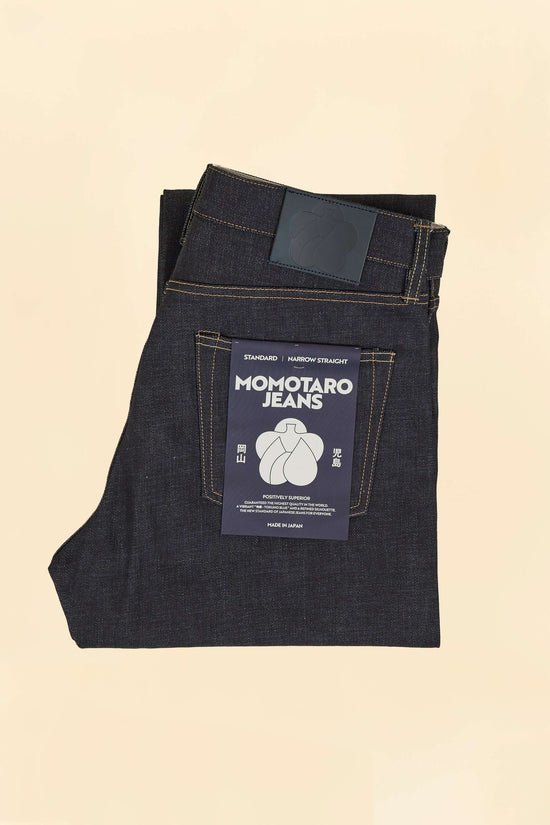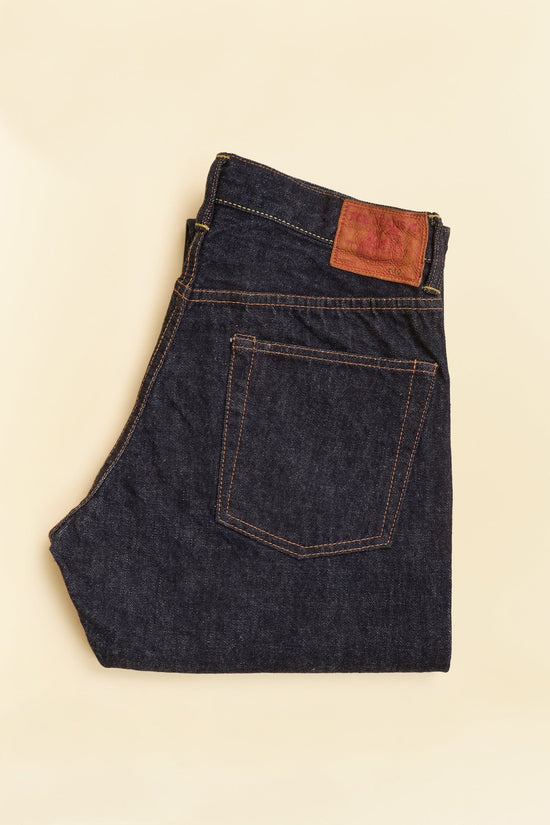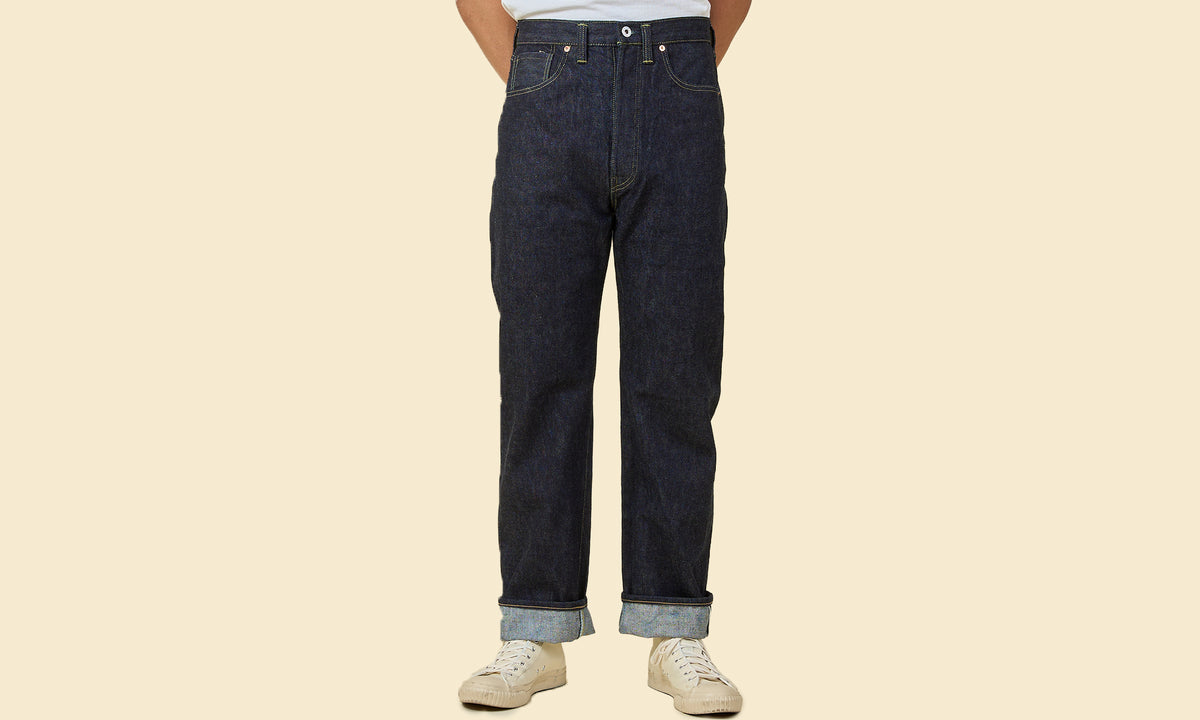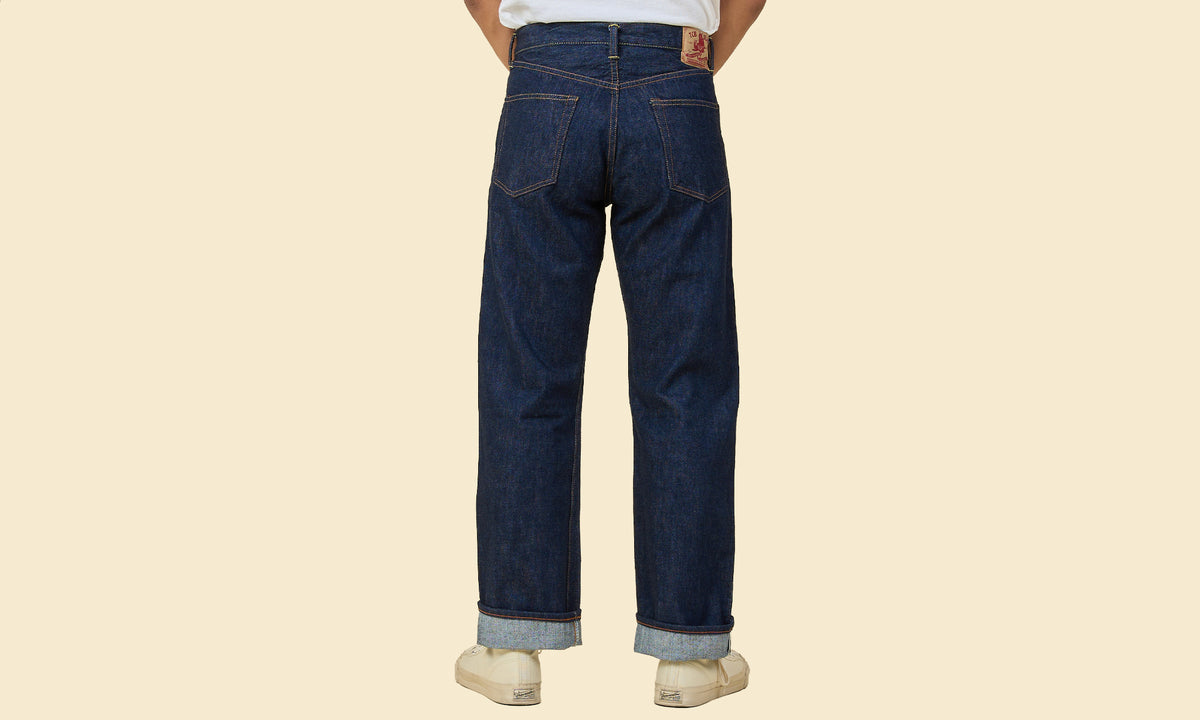
Front. Drag to compare the S40's and the 50's at the rise and through the leg.

S40's
50's

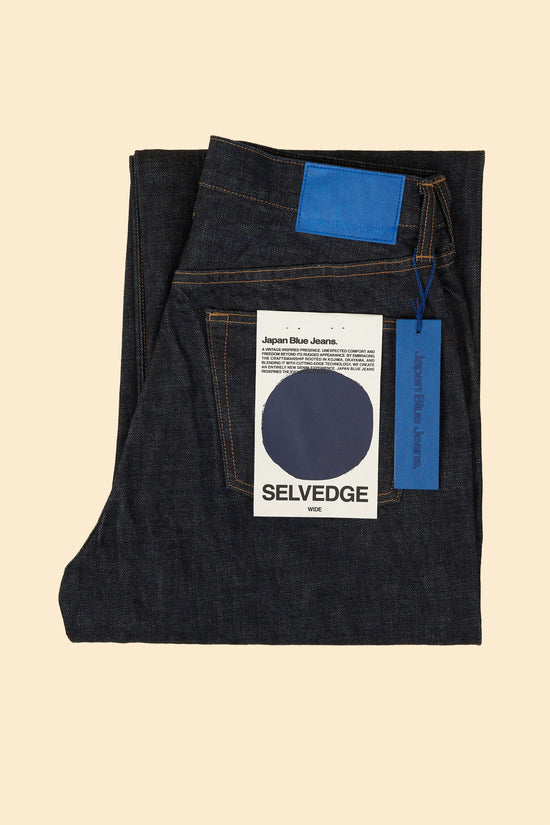
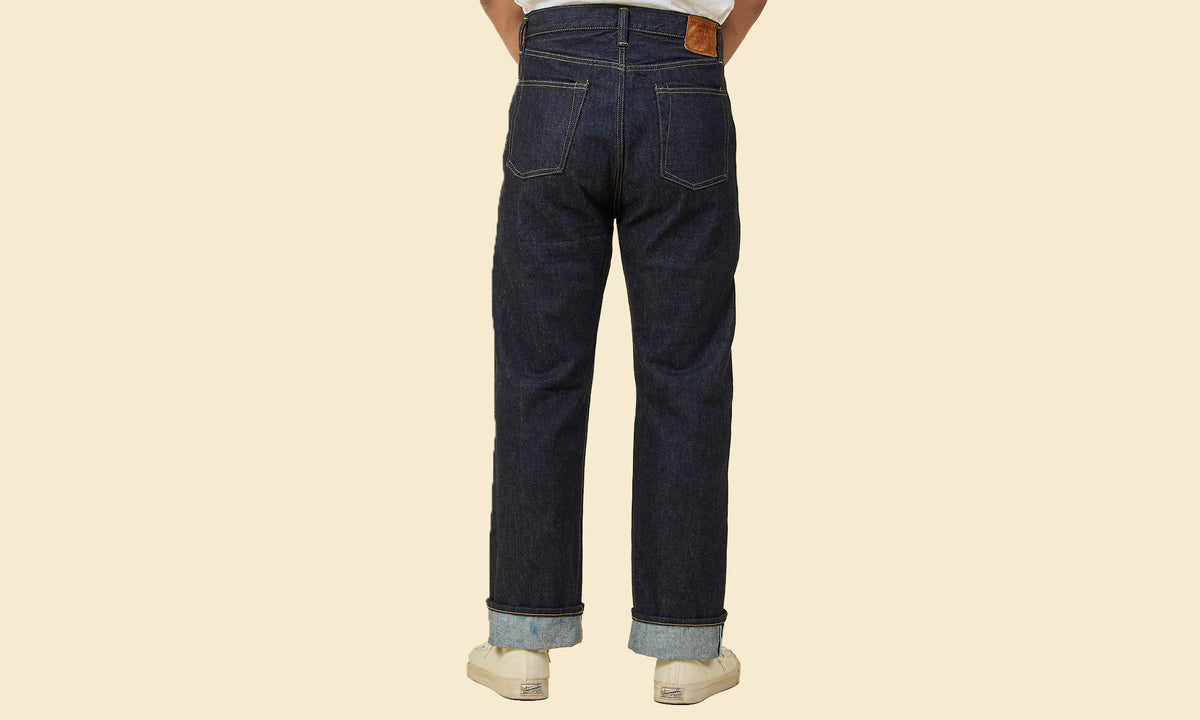
Back. The difference in seat, back rise and pocket placement.

S40's
50's
Two cottons, two yarns, two kinds of fade.

+ The Fabric: 14oz EMOT and 13.5oz Zimbabwe Cotton

S40's: 14oz EMOT cotton
A blend of cottons from Eastern Memphis, New Orleans and Texas, spun into hard-twisted yarns with visible neps. The warp is rope-dyed indigo and the weft is cream rather than bright white, which gives the cloth a warmer cast on the reverse and in the fades. Woven on vintage Toyoda shuttle looms, finished with a pink selvedge ID.

50's: 13.5oz Zimbabwe cotton
Zimbabwe cotton is a long-staple, hand-picked cotton that spins into a softer, more even yarn. TCB weaves it on vintage looms and leaves the natural variation in yarn thickness alone, so the surface still carries slub and irregularity. This is TCB's signature 50's fabric, also used on its 50's Type 2 jacket.

How each one fades
The S40's coarse, neppy yarn resists full indigo saturation and wears into a high-contrast, textured fade. The 50's fades in the vertical streaks typical of 1950s denim: small white points appear first, then gradually join into lines.

Where the two decades show in the details.

+ Construction: What Was Removed, What Came Back

Hardware
The S40's uses steel throughout: a laurel wreath top button of the kind found on period military and work garments, simple one-piece donut buttons on the fly, and steel rivets. The 50's uses copper rivets, as post-war jeans did once materials were available again.

Back pockets
On the S40's the two back pockets carry different stitch patterns, with uneven top corners and angled stitching at the base, as you see on wartime originals sewn quickly with little finishing. The 50's back pockets are secured with hidden rivets beneath the denim, set using the most durable method TCB could reproduce.

Belt loops
The S40's loops are cut in the wide wartime shape but stitched narrow, and sit with a slight gap from the waistband. On the 50's the loops follow the tidier post-war pattern.

Patch
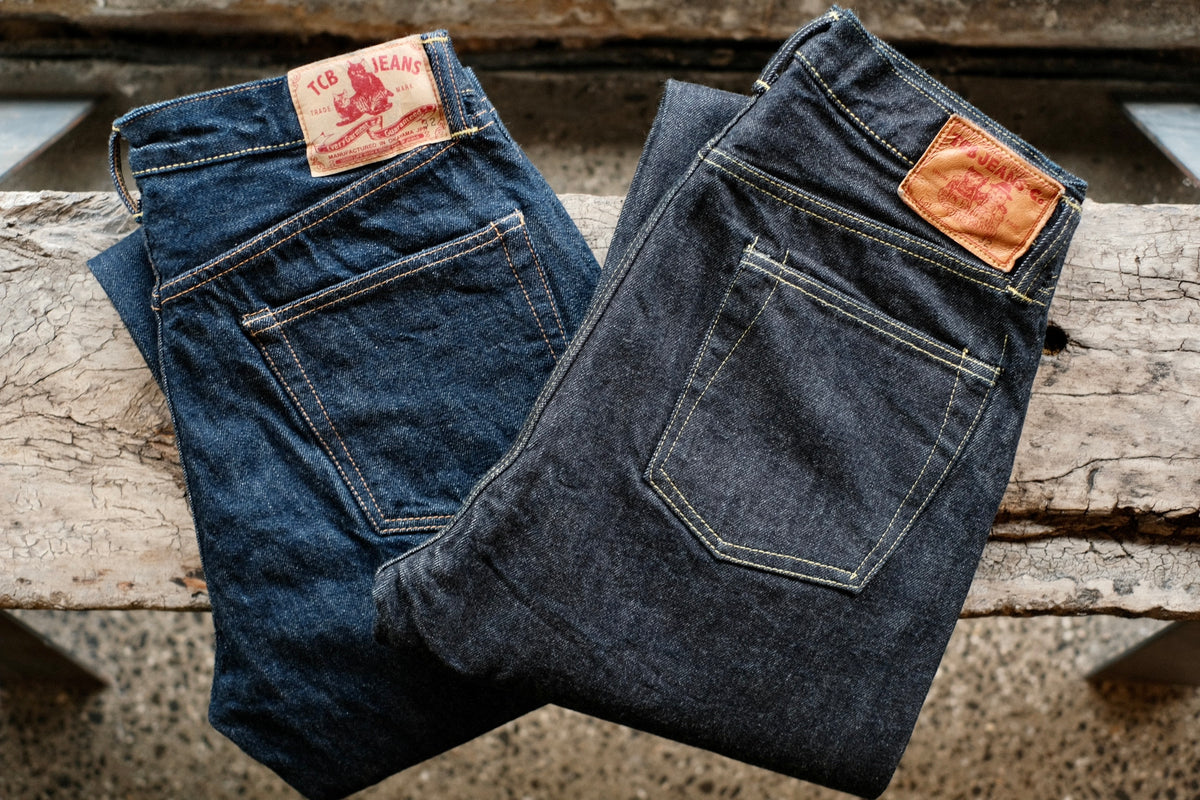
The S40's carries a TCB-branded deerskin patch. The 50's has a hand-sewn paper patch that cracks and tears as the jean is worn and washed, exposing the darker denim beneath, much as the card patches of the period did.

Thread and pocket bags
Both are sewn in Kojima with 100% cotton thread across five yarn counts; the 50's uses four thread colours matched to the original. Both have cotton twill pocket bags, and on the 50's they are deliberately sewn roughly, as the original's were.

+ Continue Browsing

+ Frequently Asked Questions

The S40's reproduces the wartime S501XX: high rise, full straight leg, 14oz EMOT cotton denim and simplified steel hardware. The 50's reproduces a 1950s jean: mid-rise, relaxed through the thigh with a slight taper, 13.5oz Zimbabwe cotton denim, copper rivets, hidden rivets and a paper patch.

We recommend sizing up one from your usual jean size. TCB runs smaller than most Japanese reproduction brands, so if you normally wear a 32, start with a 33.

We recommend sizing up two from your usual jean size. The 50's is trimmer at the waist and seat than the S40's, so if you normally wear a 32, start with a 34.

Both the S40's and the 50's are sold once washed, so most shrinkage has already happened. TCB notes that shrinkage varies between batches, so a soak or a warm wash can still take a little out of the waist and length. Wash cold to keep the size you bought.

It refers to the S501XX, the simplified version of the jean made during the Second World War, when restrictions on metal, thread and cloth led to fewer rivets, generic buttons and reduced decorative stitching.

The S40's hard-twisted, neppy EMOT cotton yarn produces a rough, high-contrast fade with plenty of texture. The 50's Zimbabwe cotton denim fades in vertical streaks, starting as small white points that gradually join into lines.

The S40's is the heavier of the two at 14oz. The 50's is 13.5oz. The difference in feel comes as much from the yarn as the weight: the S40's is coarser and more irregular, the 50's softer and more even.

Yes. Alongside the original 50's, TCB makes the Slim T 50's, with a lower rise and a tapered leg, and the Baggy 50's, a wide, relaxed version of the original pattern.

Yes. We chain-stitch hem in store, which is how both jeans would originally have been finished. We recommend washing them first and then hemming, so the length is set after any remaining shrinkage.

Didn't find your answer?

Get in touch and we will help with sizing, fit, fabric, or care advice.